Getting Started with Ice Climbing
Everything you need to know before your first time on ice
What Is Ice Climbing?
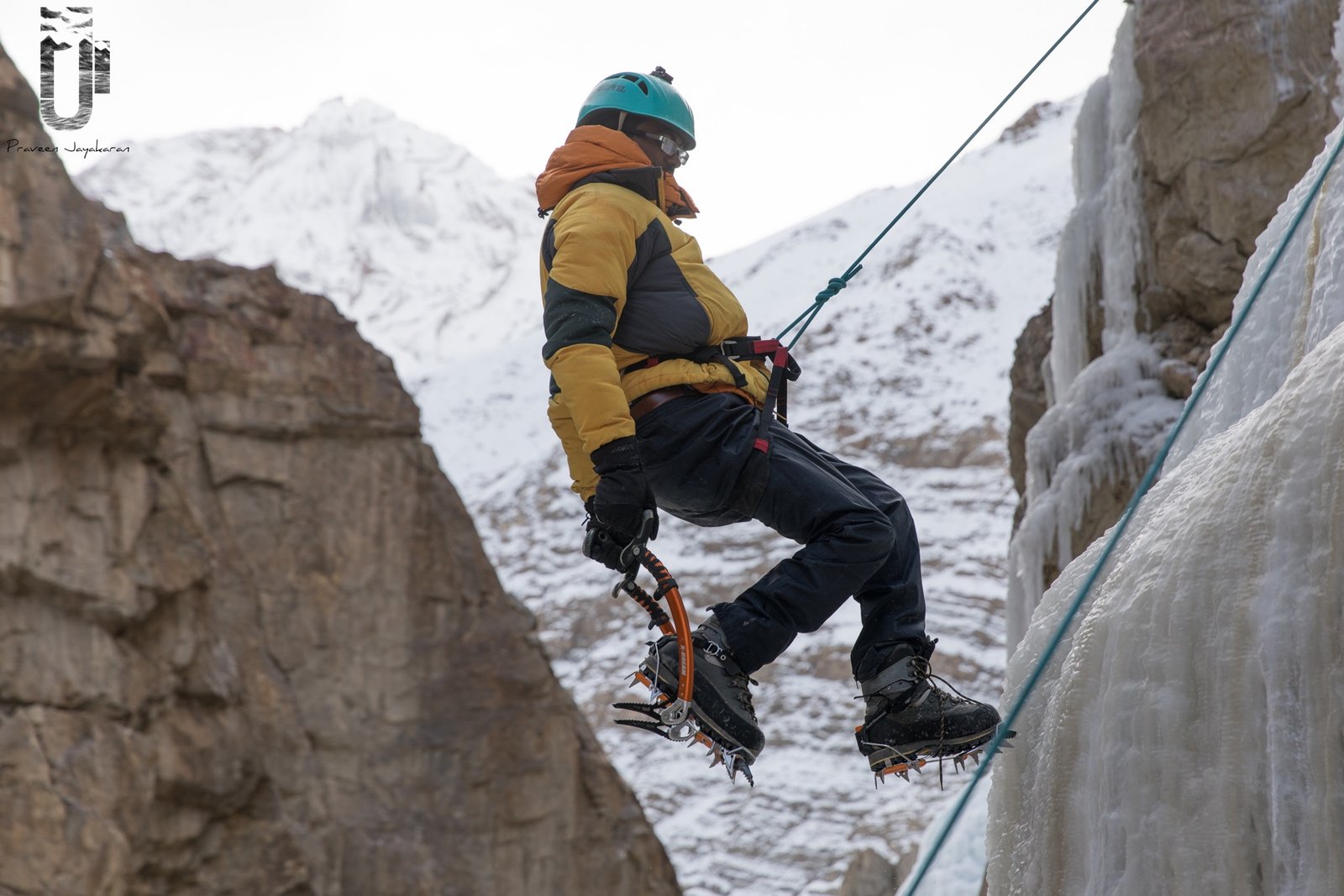
Ice climbing is the sport of ascending frozen waterfalls, glaciated faces, and couloirs using specialised equipment — crampons attached to stiff boots, two ice axes, and a rope system. In India, the sport is practiced on frozen Himalayan waterfalls that form each winter between December and March.
Unlike rock climbing, ice climbing conditions are seasonal and constantly changing. A route that is fully formed one week might be too thin, wet, or collapsed the next. This ephemerality is part of what makes ice climbing so exciting — every route is a temporary gift from the cold.
Do I Need Prior Experience?
No prior climbing experience is required for a beginner ice climbing course. What you do need:
- Reasonable physical fitness — you’ll be hiking in crampons, swinging axes, and working at altitude.
- Comfort in cold weather — temperatures at the ice can be -10°C to -20°C, with wind chill.
- No fear of heights — or at least a willingness to work through it. The first time on a vertical ice face can be confronting even for experienced trekkers.
- A sense of adventure — ice climbing is demanding but deeply rewarding. Come with the right attitude and you’ll have the experience of a lifetime.
Ice Climbing Grades
Ice climbing uses the WI (Water Ice) grading system:
| Grade | Angle | Description | Who it’s for |
|---|---|---|---|
| WI1 | 40–50° | Low-angle ice. Walking technique with crampons. | Complete beginners |
| WI2 | 50–60° | Sustained moderate ice. Begins to feel vertical. | After first session |
| WI3 | 60–70° | Sustained steep ice with rests. Beginner course standard. | Course graduates |
| WI4 | 70–85° | Sustained near-vertical, strenuous. Intermediate. | Intermediate climbers |
| WI5 | 85–90° | Vertical ice requiring excellent technique. | Advanced |
| WI6+ | 90°+ | Overhanging ice. Elite level. | Expert climbers |
Essential Equipment
If you join a guided course, technical gear (crampons, ice axes, harness, helmet) is provided. You need to bring:
Clothing Layers
- Moisture-wicking base layer (not cotton)
- Mid-layer fleece or down jacket
- Waterproof/windproof outer shell
- Warm insulated belay jacket
- Wool or synthetic gloves (two pairs)
- Warm hat / balaclava
- Neck gaiter or buff
Footwear & Accessories
- Stiff-soled mountaineering boots (crampon-compatible)
- Warm, wool or synthetic boot socks
- Waterproof gaiters
- Sunglasses / goggles (UV protection essential at altitude)
- High-SPF sunscreen
- Headlamp with spare batteries
- Personal thermos
Altitude & Acclimatisation
Most ice climbing in India takes place between 3,000m and 4,500m. Key tips:
- Arrive 1–2 days early to acclimatise before climbing
- Stay well hydrated — 3–4 litres per day
- Avoid alcohol in the first few days at altitude
- Watch for AMS symptoms: headache, nausea, dizziness. Descend if they worsen.
How to Learn
The best way to start ice climbing in India is through a structured course with a qualified guide. The Piti Dharr Ice Climbing Courses at Kaza, Spiti Valley is the country’s premier destination for beginner and intermediate ice climbing instruction — running every January–February.